



GBA GUT-BRAIN AXIS
A SYSTEMS-BASED APPROACH TO BRAIN & GUT HEALTH
THE BRAIN IS A SYSTEM.
What if we stopped looking at the brain one pathway at a time?
The brain does not function in isolation.
Neuroinflammatory signaling, blood-brain barrier integrity, the gut microbiome, intestinal barrier function, microvascular circulation, mitochondrial function, and the biological pathways
involved in neuroplasticity are deeply interconnected.
These systems don't function independently. They communicate with & influence one another.
That interconnected biology became the foundation behind the development of GBA Gut-Brain Axis.
GBA was designed to nutritionally support several interconnected biological systems involved in brain health -
not simply one pathway at a time.
A decade of research led us to a different approach:
Look at the systems that influence brain health together.
.
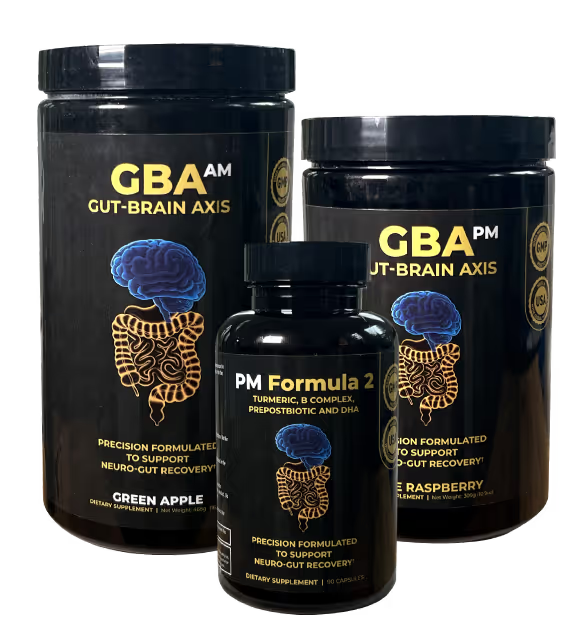
($250 value)
ONE SYSTEM. MULTIPLE PATHWAYS OF SUPPORT
- 9 COMPOUNDS
- Supporting a healthy neuroinflammatory response
- 7 COMPOUNDS
- Supporting Blood-Brain Barrier Integrity
- 720 BILLION CFU • 4 PROBIOTIC STRAINS
- PLUS Prebiotic & Postbiotic support
- Nutritional and microbial support for a healthy, balanced gut microbiome.
- 7 COMPOUNDS
- Supporting Intestinal Barrier Health
- 5 COMPOUNDS
- Supporting the Brain's 400 Mile Microvascular Network
- Supporting healthy endothelial function, cerebral microcirculation, blood flow, and nutrient
delivery.
- 11 COMPOUNDS
- Supporting Neuroplasticity & Neuronal Health
- Supporting nutritional pathways involved in:
BDNF • NGF • MYELINATION • MITOCHONDRIAL FUNCTION • NEURONAL
HEALTH
THE DIFFERENCE ISN'T ONE INGREDIENT.
IT'S HOW THE SYSTEM WAS DESIGNED.
GBA brings together targeted nutritional compounds to support multiple biological systems that
influence brain and gut health because the biology itself is interconnected
Developed by Scott Bukow IFMT, CHC-The former Global Educator for Metagenics/The Institute for Functional Medicine
The Visionary Behind GBA Gut Brain-Axis
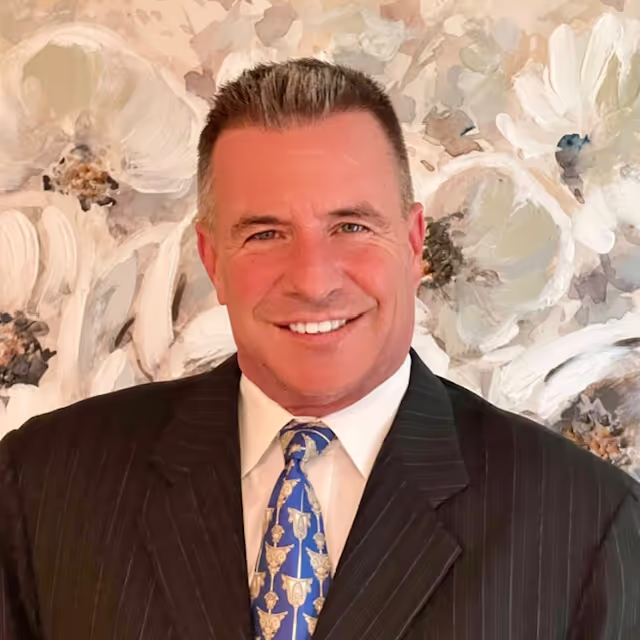
Scott Bukow, CFMP, CCN, CHC
- Former Lead Educator Metagenics & IFM
- 25+ Year Medical Food Formulator
- TBI Survivor & Clinical Specialist in TBI recovery
- Recommended by The Brain Injury Association of America
MEET THE FOUNDER
GLOBAL FUNCTIONAL MEDICINE EDUCATOR
Former global educator for Metagenics and the Institute for Functional Medicine (IFM), helping educate physicians and healthcare practitioners across 24 countries and six continents.
25+ YEARS IN NUTRITIONAL FORMULATION
More than 25 years of experience working with clinical nutrition and formulation.
Formulation is about far more than choosing ingredients. It requires understanding the form of each nutrient, sourcing, bioavailability, dosing, compatibility, and how compounds work together within complex biological systems.
That experience became fundamental to the development of GBA Gut-Brain Axis.
30 YEARS IN FUNCTIONAL MEDICINE
Scott's career in Functional Medicine has centered on a simple principle:
The body doesn't function as a collection of isolated parts.
His work increasingly focused on the interconnected biology of the brain; including inflammatory balance, barrier integrity, the gut-brain axis, microvascular health, mitochondrial function, and the biological pathways involved in neuronal health and neuroplasticity.
That systems-based thinking ultimately became the foundation for GBA.
A PERSONAL JOURNEY THAT CHANGED HIS DIRECTION
In 2014, Scott suffered a severe traumatic brain injury.
That experience changed the direction of his professional life and began what became more than a decade of studying the complex biology associated with brain health.
His personal experience didn't replace the science.
It gave him a reason to keep asking questions.
PRACTITIONER & EDUCATOR
Scott continues to work with individuals while researching and teaching the interconnected
biological systems involved in brain and gut health.
His work is centered on translating complex science into something practitioners and individuals can understand while asking a question that ultimately became central to GBA:
What if we stopped looking at the brain one pathway at a time?
THREE DECADES OF BUILDING & EDUCATING
Throughout his career, Scott has helped introduce and expand Functional Medicine, clinical
nutrition, and European phytopharmaceutical products into international markets.
His experience spans clinical education, nutritional formulation, practitioner training, product development, international business, and consumer health education.
Interested in learning more? Contact Scott Bukow to see if this is right for you.
This formulation provides targeted nutritional support for:
Calm Neuroinflammation
A TBI triggers neuroinflammation, which is the root cause of most ongoing symptoms. However, inflammation in the brain doesn’t come from just one source—there are six different inflammatory triggers that can keep re-igniting damage if they are not addressed. Until neuroinflammation is calmed, symptoms often remain or worsen over time.
Seal and Protect the Blood–Brain Barrier (BBB)
The blood–brain barrier is your brain’s security fence. After a TBI, it becomes “leaky,” allowing immune cells, toxins, and inflammatory substances to pass through. When this happens, the body can mistakenly attack its own brain tissue and molecules released during the injury get tagged as foreign. If the BBB is open, these immune attacks can continue—and healing cannot fully occur. Sealing the BBB is essential for stopping ongoing immune-driven brain damage.

Heal the Gut and Microbiome
A TBI causes a rapid shift from healthy bacteria to unhealthy bacteria in the gut, leading to leaky gut and gut–brain axis dysbiosis. This sends inflammatory cytokines back to the brain, which can: 1) Kill neurons; 2) Trigger microglial overactivation (the brain’s immune system); 3) Increase anxiety, depression, and cognitive symptoms. The gut must be healed and sealed to stop inflammation from constantly being sent back to the brain. Otherwise a bi-directional inflammatory loop continues and even worsen.
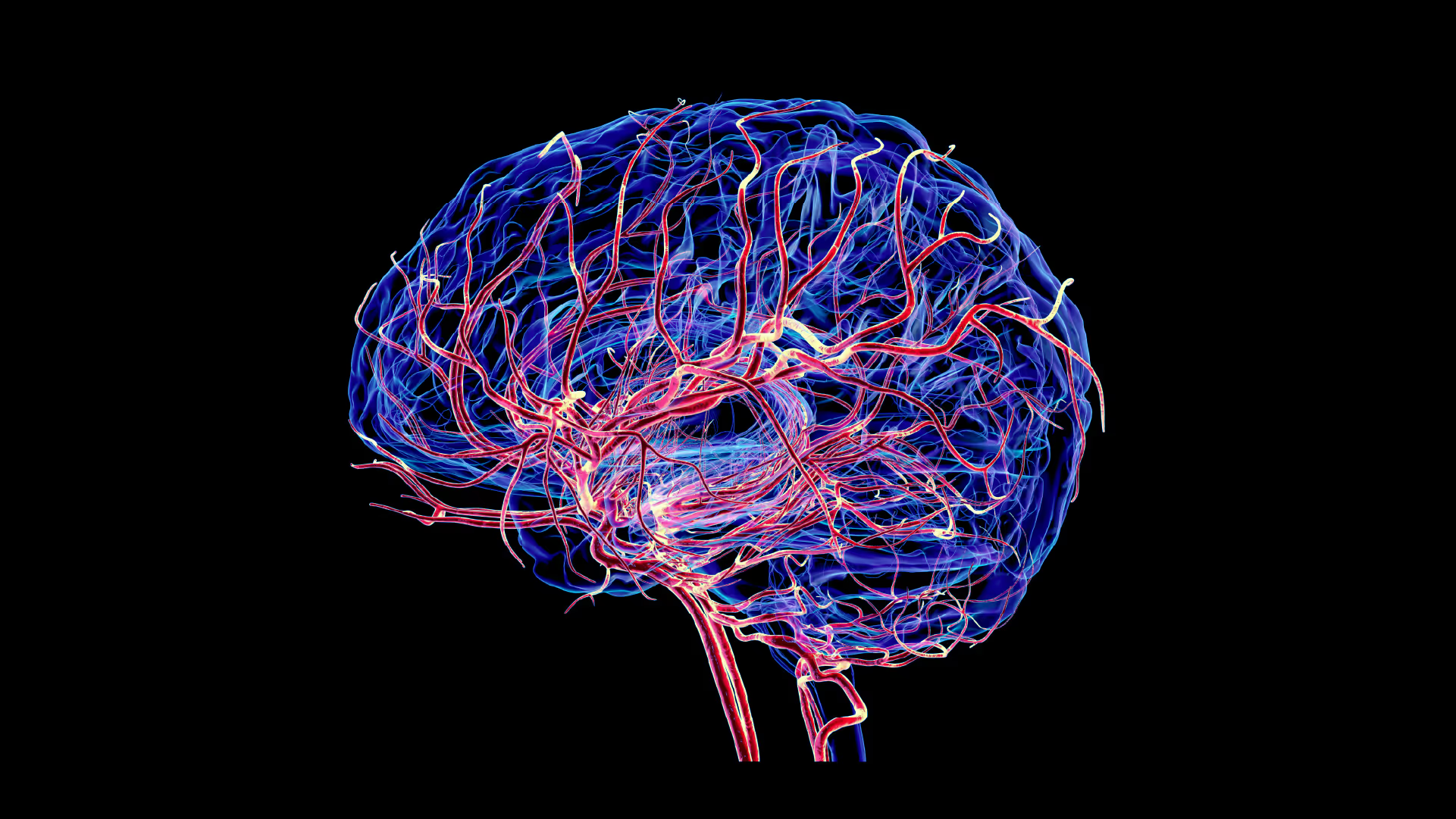
Repair the 400-Mile Microvascular Network
Your brain depends on a vast network of tiny blood vessels—over 400 miles of microvasculature—to deliver oxygen, glucose, and nutrients. TBI and inflammation can damage this system and lead to: 1) Restricted blood flow; 2) Reduced oxygen and glucose delivery; 3) Calcium deposits in capillaries; 4) Build-up of metabolic waste. If circulation through this network is not restored, the brain cannot fully repair or regain normal function.
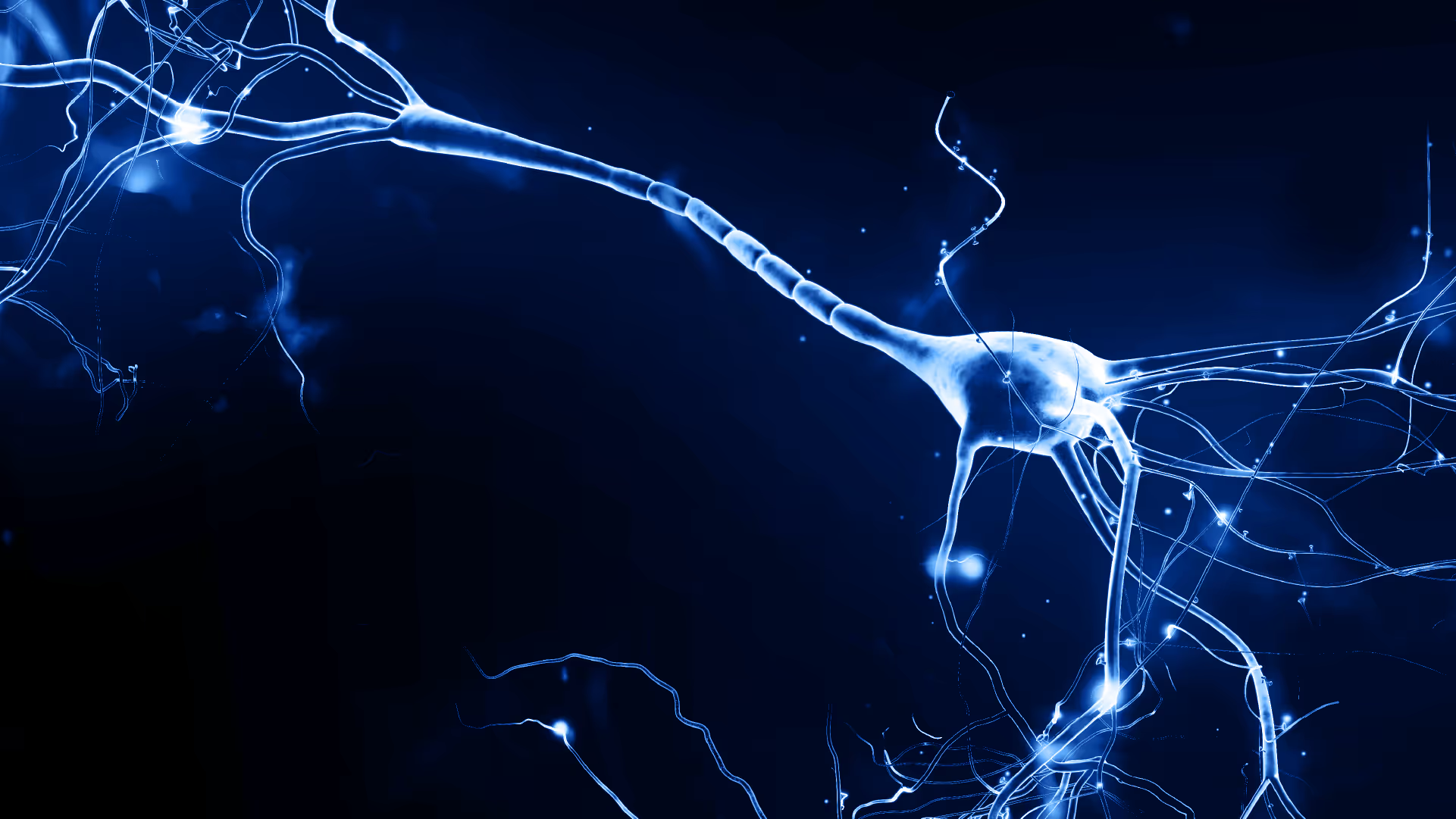
Support Neuroplasticity, Neurogenesis, BDNF, and NGF
Once inflammation is calmed, the BBB is sealed, the gut is restored, and microvascular flow is improved, the environment now allows the brain to heal. The right clinically studied compounds can support: 1) Neuroplasticity: rewiring and restoring functional connections; 2) Neurogenesis: creation of new neurons; 3) BDNF (Brain-Derived Neurotrophic Factor): a key growth factor that strengthens synapses, improves learning and memory, and supports long-term brain repair; 4) NGF (Nerve Growth Factor): supports the survival, growth, and maintenance of neurons, helping damaged nerve pathways recover. This is how patients begin experiencing lasting improvements—not just symptom management.

Calm Neuroinflammation
A TBI triggers neuroinflammation, which is the root cause of most ongoing symptoms. However, inflammation in the brain doesn’t come from just one source—there are six different inflammatory triggers that can keep re-igniting damage if they are not addressed. Until neuroinflammation is calmed, symptoms often remain or worsen over time.
Support Healthy Blood–Brain Barrier (BBB)
The blood–brain barrier is your brain’s security fence. After a TBI, it becomes “leaky,” allowing immune cells, toxins, and inflammatory substances to pass through. When this happens, the body can mistakenly attack its own brain tissue and molecules released during the injury get tagged as foreign. If the BBB is open, these immune attacks can continue—and healing cannot fully occur. Sealing the BBB is essential for stopping ongoing immune-driven brain damage.

Support the Gut Barrier and Microbiome
A TBI causes a rapid shift from healthy bacteria to unhealthy bacteria in the gut, leading to leaky gut and gut–brain axis dysbiosis. This sends inflammatory cytokines back to the brain, which can: 1) Kill neurons; 2) Trigger microglial overactivation (the brain’s immune system); 3) Increase anxiety, depression, and cognitive symptoms. The gut must be healed and sealed to stop inflammation from constantly being sent back to the brain. Otherwise a bi-directional inflammatory loop continues and even worsen.
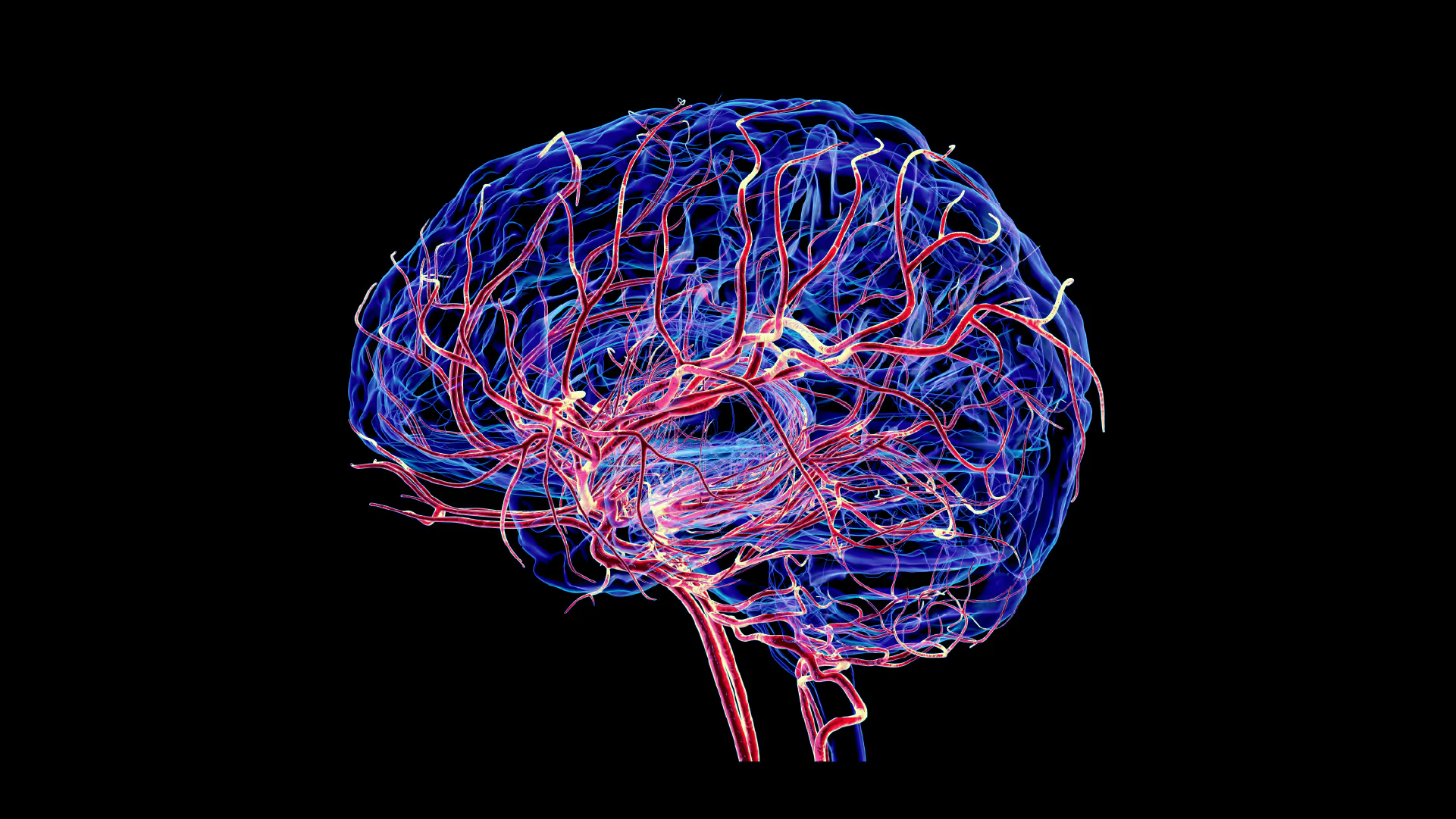
Support the Brain’s 400-Mile Microvascular Network
Your brain depends on a vast network of tiny blood vessels—over 400 miles of microvasculature—to deliver oxygen, glucose, and nutrients. TBI and inflammation can damage this system and lead to: 1) Restricted blood flow; 2) Reduced oxygen and glucose delivery; 3) Calcium deposits in capillaries; 4) Build-up of metabolic waste. If circulation through this network is not restored, the brain cannot fully repair or regain normal function.

Support Neuroplasticity, Neurogenesis, BDNF, and NGF
Once inflammation is calmed, the BBB is sealed, the gut is restored, and microvascular flow is improved, the environment now allows the brain to heal. The right clinically studied compounds can support: 1) Neuroplasticity: rewiring and restoring functional connections; 2) Neurogenesis: creation of new neurons; 3) BDNF (Brain-Derived Neurotrophic Factor): a key growth factor that strengthens synapses, improves learning and memory, and supports long-term brain repair; 4) NGF (Nerve Growth Factor): supports the survival, growth, and maintenance of neurons, helping damaged nerve pathways recover. This is how patients begin experiencing lasting improvements—not just symptom management.
Precision Formulated to Support Neuro-Gut Recovery
Suggested Use: Targeted AM/PM Formula for Optimal Neuro-Gut Recovery. As a dietary supplement, take one (1) scoop with or w/o food, in the morning with 12-16 fl oz of water. Take one (1) scoop with or w/o food in the evening with 3 capsules.
Some patients start with a ¼ dose of AM and PM plus one capsule the first day. ½ dose the second day 2 capsules. This is mainly to see if any gastric upset which is not common.Then full dose the 3rd day.
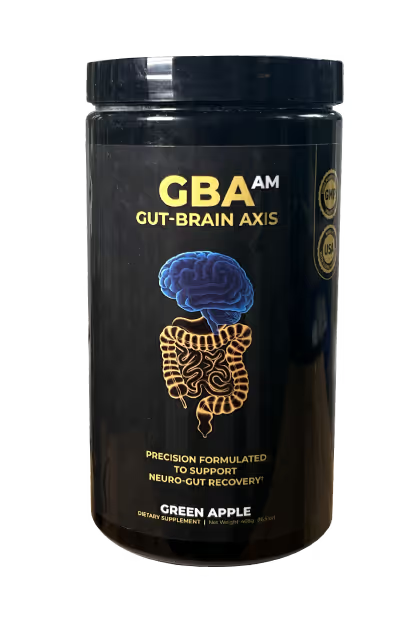
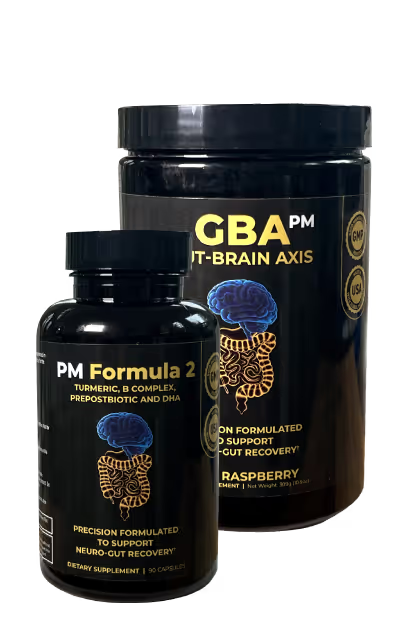
See the Data for Yourself
Below is an example of self reported data from a patient who was 12 yrs Post TBI and getting worse.
Every traumatic brain injury is unique, and no two individuals follow the same trajectory. While GBA cannot treat or cure a TBI, its comprehensive medical-nutrition approach is designed to support the underlying systems that influence all five key dysfunctions involved in neurologic health.
The following timeline reflects how these clinically studied compounds may synergistically support gut–brain axis balance, neuroimmune regulation, vascular health, barrier integrity, and neuroplasticity over time.
%201.avif)
| Physical | Start | Now | Cognitive & Emotional | Start | Now |
|---|---|---|---|---|---|
| Head Discomfort | 10 | 8 | Attention | 4 | 1 |
| Energy & Stamina | 6 | 2 | Recall & Retention | 4 | 1 |
| Physical Comfort | 1 | 0 | Decision Making | 4 | 1 |
| GI Comfort | 4 | 1 | Processing Speed | 4 | 1 |
| Restful Sleep | 6 | 2 | Verbal Recall | 4 | 1 |
| Mobility | 8 | 3 | Communication Ease | 5 | 1 |
| Light Tolerance | 7 | 1 | Emotional Balance | 6 | 2 |
| Muscle Control | 8 | 1 | Stress Response | 5 | 1 |
| Vision Comfort | 8 | 1 | Initiative | 5 | 1 |
| Stability Coordination | 5 | 1 | Positive Mood | 4 | 1 |
| Swallowing Ease | 5 | 1 | Self Regulation | 4 | 1 |
| Cell | Cell | Cell | Impulsivity | 2 | 2 |